Evidence-informed care
for complex lives
Individual and family therapy, moral injury care, ministry support, clinical supervision, and organisational consulting. Faith-integrated care available. Delivered via telehealth, wherever you are in Australia.
Three ways in
For individuals
Looking for therapy
Individual therapy by telehealth, wherever you are in Australia. Book directly with Jaya or Jesse, or view all available times and decide once you see the calendar.
Book an appointment →For referrers
GP or health professional
Referral pathways, Mental Health Treatment Plan and Medicare information, and what each clinician takes on.
Referral information →For organisations
Organisation or church
Moral injury education and consulting, integrative formulation for complex youth work, and confidential psychological care for ministry staff.
Explore consulting →Psychology that meets people where they are
Our work is formulation-driven: we start by building a clear, shared understanding of what is actually driving your challenges, and let that, rather than a manual, guide the approach. It is evidence-based, integrative, and led by what matters to you, from the first session through to the last.
Based in Melbourne and delivering telehealth across Australia, we draw on an integrated range of therapies, matched to your formulation and individual needs, with outcomes tracked collaboratively at every step.
Five areas of practice
Therapy & Family
Integrative individual and family therapy for adults, couples, and families. Evidence-based care for longstanding patterns, life transitions, relationship conflict, and the impact of one person's mental health on the whole family.
Learn more → Christian, faith-integrated therapy →Moral Injury
Care for individuals and organisations carrying moral injury, the wound of acting against, or witnessing violations of, deeply held values.
Learn more → Moral injury & faith →Ministry & Church
Focused support for ministers, pastoral workers, minister spouses, and returning mission workers. Includes Pastoral Narrative Disclosure (PND) and faith-integrated psychological care.
Learn more →Supervision
Board-approved supervision for registrars and endorsed psychologists, with reflective peer consultation for complex and treatment-resistant work. Integrative and formulation-driven.
Learn more →Organisational Consulting
Consulting to welfare-sector and frontline organisations: moral injury education and systemic review, and integrative formulation for young people in complex, high-risk, or stuck situations.
Learn more →Feedback Informed Treatment
We use validated outcome measures at every session, reviewed collaboratively with clients to track progress, strengthen the therapeutic relationship, and inform clinical decisions. It is best-practice care, built into how we work.
Clinical Supervision
Board-approved supervision delivered by Jaya Winter, endorsed clinical psychologist and Board-Approved Supervisor. Available for registrars completing their clinical or general endorsement pathway, and peer consultation for practising psychologists.
Supervision that develops the whole clinician
Good supervision is not just case management, it is a space to develop clinical reasoning, strengthen professional identity, process the relational and emotional demands of the work, and build the reflective capacity that sustains a long career.
We offer supervision grounded in evidence-based frameworks, with particular expertise in transdiagnostic, formulation-driven, and integrative practice. Supervisees are supported to develop their own clinical voice rather than replicate a single model.
Supervision is available for registrars completing the AHPRA-endorsed programme of study, psychologists seeking Board-approved or peer supervision, and senior practitioners wanting reflective consultation.
Registrar Supervision
AHPRA-compliant supervision for registrars completing general or clinical endorsement pathways.
Peer Consultation
Reflective case consultation for endorsed practitioners navigating complex or treatment-resistant presentations.
Integrative Framework
Support developing clinical frameworks that draw coherently on multiple evidence-based models.
Professional Development
Career stage planning, scope of practice, managing ethical complexity, and professional identity.
Telehealth Available
All supervision is delivered via telehealth, making it accessible to practitioners across Australia regardless of location.
Documentation Support
Assistance with supervision logs, competency documentation, and Board requirements where needed.
What supervision can cover
Transdiagnostic Approaches
Case formulation across diagnostic categories, working with the common mechanisms that cut across presentations rather than treating each diagnosis in isolation.
Integrative Practice
Coherent, formulation-driven integration of CBT, DBT, ACT, and Schema Therapy: how to draw on multiple models without losing clinical direction.
Complex Presentations
Comorbidity, personality pathology, trauma histories, treatment-resistant presentations, and clients who don't fit diagnostic categories cleanly.
Measurement-Based Practice
Embedding FIT and psychometrics into clinical work, using data to inform treatment and have honest conversations about progress.
Moral & Ethical Complexity
Navigating ethical dilemmas, dual role situations, scope of practice decisions, and the personal toll of morally complex clinical work.
Clinician Wellbeing
Addressing vicarious trauma, compassion fatigue, burnout, and the relational demands of sustained psychological work.
Book a supervision enquiry
Initial enquiries are welcome to discuss fit, availability, and supervision structure before committing to an arrangement.
Referral information
For GPs, psychiatrists, and allied health colleagues referring to Winter Psychology & Consulting. Individual and family therapy, moral injury care, and faith-integrated care, delivered by telehealth across Australia.
Who to refer to
Two clinicians with distinct scopes. The right fit depends on the presentation and on whether a Medicare rebate is needed.
Jaya Winter
Clinical Psychologist
Endorsed clinical psychologist and Board-Approved Supervisor, with experience across hospital, community, Out-of-Home Care, and family settings. Substantial experience with complex and treatment-resistant presentations.
Refer for
- Family therapy and complex family systems
- Complex and treatment-resistant presentations
- Trauma histories and personality pathology
- Eating and body image
- Children, adolescents, and their families
Medicare: rebates available with a Mental Health Treatment Plan.
Jesse Winter
Provisional Psychologist
A provisional psychologist. Holds a Bachelor of Theology alongside his psychology training, and is the 2024 Emergency Services Foundation Scholarship recipient.
Refer for
- Moral injury assessment and treatment
- Emergency services and first responders
- Christian clients wanting faith-integrated care
- Ministers, pastoral workers, and ministry spouses
- Anxiety, depression, and adjustment
Medicare: sessions with Jesse, as a provisional psychologist, do not attract a Medicare rebate.
The referral process
Referrals can be addressed to Winter Psychology & Consulting generally. We triage internally and match the patient to the appropriate clinician.
Step 1
Prepare the referral
A referral letter and, where a rebate is sought, a Mental Health Treatment Plan. Address it to the practice generally, or to a named clinician if you have a preference.
Step 2
Send it to the practice
Email the referral and plan to admin@winterpsychology.com.au, or have your patient bring their referral details to booking. We aim to respond promptly and will confirm the allocated clinician.
Step 3
Patient books online
Your patient books directly and selects "Initial Consultation" for a first appointment. They should provide their referral details at booking.
Not sure who fits?
If you would like to discuss a referral before sending it, get in touch and we will talk it through.
What your patient should expect
Medicare rebates
Rebates are available for sessions with Jaya Winter under a Mental Health Treatment Plan. Sessions with Jesse Winter, as a provisional psychologist, do not attract a Medicare rebate.
Because referrals are accepted to the practice generally, please make your patient aware that the rebate follows Jaya. If a rebate is essential for them, note that on the referral and we will allocate accordingly.
Jaya Winter, Clinical Psychologist
AHPRA registration: PSY0001896171
Telehealth only
Winter Psychology & Consulting is a telehealth-only practice. We do not offer in-person appointments at any location. All sessions are delivered by secure video, and patients can be seen anywhere in Australia.
This suits patients who are geographically remote, in high-demand roles with irregular hours, or who prefer not to attend a local clinic. It may not suit patients who need in-person assessment, or who lack a private space and a reliable connection.
Winter Psychology & Consulting is a private practice and is not a crisis or emergency service.
Referrer information sheet
A one-page summary of scopes, referral process, and Medicare details, for your records or your practice software.
Refer a patient
Patients can book directly online, or you are welcome to contact the practice first to discuss fit and availability.
Organisational Consulting
Consulting for organisations across moral injury and complex youth work: education, systemic review, integrative formulation, and practical roadmaps. Each package is a starting framework, and most engagements are scoped to your situation.
What we offer
We offer five consulting modules spanning moral injury, spiritual health, complex presentations, ministry care, and church partnership. Each is a starting framework, and most engagements are scoped to fit your specific situation.
Download Consulting Packages Overview (PDF)Package 01
Moral Injury Module
A standalone module for building moral injury awareness, organisational understanding, and resilience. Through education, consultation, and applied clinical frameworks, we help individuals, teams, and organisations recognise moral injury, understand the conditions in which it takes root, and strengthen what protects against it. Delivered by Jesse Winter, Provisional Psychologist.
Package 02
Moral Injury and Spiritual Health
A standalone session for churches, ministries, and NGOs exploring the link between moral injury and spiritual health. Low spiritual health is often a symptom of moral injury, and integrating spiritual health grows moral maturity in ways standard psychology typically does not. We examine how religious, spiritual, and pastoral care shape both the prevention of moral injury and recovery from it. Delivered by Jesse Winter, Provisional Psychologist.
Package 03
Complex Presentations
Integrative formulation and consultation for welfare-sector organisations and individuals supporting young people in complex or treatment-resistant situations. Delivered by Jaya Winter.
Package 05
Church & Denominational Partnership
Confidential, theologically aligned psychological care for ministry staff, with no reporting line back to the church, subject only to the standard legal limits that apply to every psychologist in Australia. Scoped to your size and needs in an initial conversation, across three tiers, from a local church to a denomination or sending organisation. Billed to your church or organisation: pay per session, or an annual retainer for better value, guaranteed and priority bookings, and discounted further sessions. Retainer terms, including the minimum term and how the reduced session rate applies, are set out in the written agreement provided before any partnership begins. Delivered by Jesse Winter, Provisional Psychologist.
Need something purpose-built?
These packages are starting frameworks. If your organisation has a specific need, contact us to scope something tailored.
Scope an engagement
Tell us about your organisation and what you are working to address, and we will propose a way forward.
Moral Injury
PTSD is struggling to process the event. Moral injury is struggling to live with the event.
Jesse Winter, Winter Psychology & Consulting
A wound to the moral self
Moral injury is now recognised in the DSM-5-TR (Z65.8) as a moral problem that may be a focus of clinical attention. Increasingly established in the clinical literature, it is understood as the biological, psychological, social, and spiritual impact of grievous moral transgressions, violations, or betrayals, extending to what some frameworks term moral trauma at its most severe.
The central wound is not fear. It is guilt, shame, betrayal, and the fracturing of moral identity. At its core, moral injury often involves a conflict between two tightly held moral values: living out one moral value forces a person to betray another. The injury is not simply that something bad happened. It is that doing or not doing the right thing violated something else they held as right.
“People can usually recover from horror, fear, and grief … so long as ‘what’s right’ has not also been violated.” (Shay, 1994)
Moral injury produces a distinct cluster of symptoms that differ from both PTSD and depression, though it frequently co-occurs with both:
- → Intense guilt or shame about what happened, what you did, or what you failed to do
- → Self-condemnation and difficulty forgiving oneself or others
- → Loss of meaning, purpose, and vocational identity
- → Betrayal by institutions, organisations, or leaders
- → Fractured sense of identity and core values
- → Spiritual and religious distress
- → Social withdrawal and difficulty connecting with others
Moral injury can occur in any context where deeply held values are violated. Those at elevated risk include:
- → Emergency services: firefighters, paramedics, police, and communications officers who are exposed to tragedy, institutional betrayal, or are prevented from providing care
- → Defence and veterans: military personnel who have experienced combat, witnessed harm, or been ordered to act against their values
- → Healthcare workers: clinicians who are unable to provide adequate care due to systemic constraints
- → Ministry and pastoral workers: those navigating the moral and spiritual weight of vocational religious leadership
- → Anyone who has experienced betrayal, complicity in harm, or a profound violation of their values
Moral injury and PTSD frequently co-occur and are sometimes confused, but they are distinct in their central mechanism and what helps.
PTSD
- A fear-based anxiety response
- The threat feels present and ongoing
- Hyperarousal, avoidance, intrusions
- “I am not safe”
- Responds to trauma-focused therapies (CPT, PE)
Moral Injury
- A wound to values and identity
- Guilt, shame, and self-condemnation dominate
- Loss of meaning and moral coherence
- “I am not who I thought I was”
- Standard PTSD treatments may not be sufficient on their own
Burnout and moral injury are often conflated, and both can be present, but they are distinct in origin, experience, and what helps.
Burnout
- Depletion from sustained overload
- Exhaustion, cynicism, reduced efficacy
- Gets better with rest and recovery
- “I have nothing left to give”
Moral Injury
- A wound to values and identity
- Guilt, shame, self-condemnation
- Rest does not resolve it
- “I am not who I thought I was”
The person with burnout often wants to return to who they were before. The person with moral injury often describes feeling that the person they were no longer exists: the work did not tire them out, it changed them.
Current best-practice PTSD interventions, including Prolonged Exposure (PE) and Cognitive Processing Therapy (CPT), were developed primarily to address fear-based responses. Moral injury operates differently: the wound is less about perceived safety and more about a genuine violation of deeply held values. These treatments help many people, including with trauma-related guilt and shame, but on their own they may not be sufficient to address the moral dimensions of the injury.
Our work with moral injury directly addresses guilt, shame, betrayal, values conflict, and the reconstruction of moral identity. Jesse draws on ACT, schema therapy, and faith-integrated frameworks, adapted to the individual's specific moral and spiritual context.

Moral injury on a continuum
Not everyone exposed to morally injurious events develops moral injury. Where someone sits on the continuum shapes what kind of support is appropriate.
Moral Frustration
Facing moral challenges that require integration into one's moral framework.
Moral Distress
Increasing moral and psychological impairment when experiences cannot be integrated.
Moral Injury
Pervasive, enduring, and impairing. A deep wound to the moral self.
For Christians, moral injury reaches into faith itself: guilt and grace, anger at God, doubt, and the loss of faith community.
Moral injury and faith →How Jesse thinks about moral injury
Four interconnected frameworks inform Jesse's approach to assessment and treatment.
Moral Contexts & Code Switching
Moral injury can emerge when the moral code demanded in one life context fundamentally violates the code held in another, particularly when a person has no way to exit the conflict. Full detail in the overview (PDF)
Moral Drift
When moral suffering cannot be resolved, a person may unconsciously drift away from the very values and commitments that were injured, eroding identity and relationships over time. Full detail in the overview (PDF)
Reciprocal Meaning-Making
Whether a morally injurious event can be integrated, or instead shatters someone's worldview, depends substantially on the flexibility and strength of their existing moral and spiritual framework. Full detail in the overview (PDF)
Moral Maturity & Psycho-Spiritual Development
Drawing on Fowler and Kohlberg, people at earlier, more concrete stages of moral and spiritual development may be more vulnerable to moral injury when their values are violated. Full detail in the overview (PDF)
Individual and organisational work
Assessment and psychological treatment for individuals experiencing moral injury. Jesse draws on evidence-informed approaches that directly address guilt, shame, values conflict, betrayal, and the reconstruction of moral identity, integrated with trauma-informed care where relevant.
Jesse consults to organisations seeking to understand, address, and prevent moral injury in their workforce, including emergency services agencies and the Emergency Services Foundation. Services include staff education, leadership consultation, systemic review of moral risk factors, and targeted professional development.
In the field
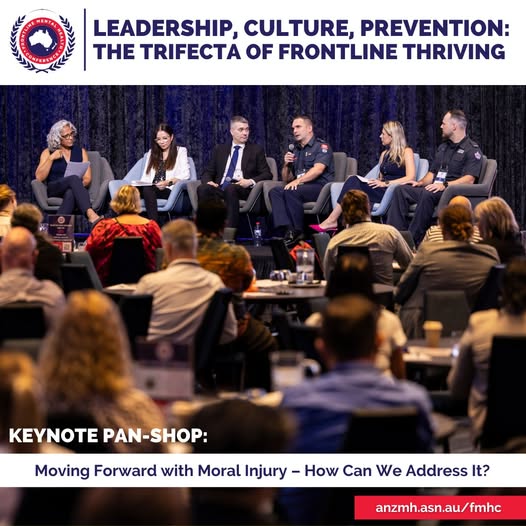
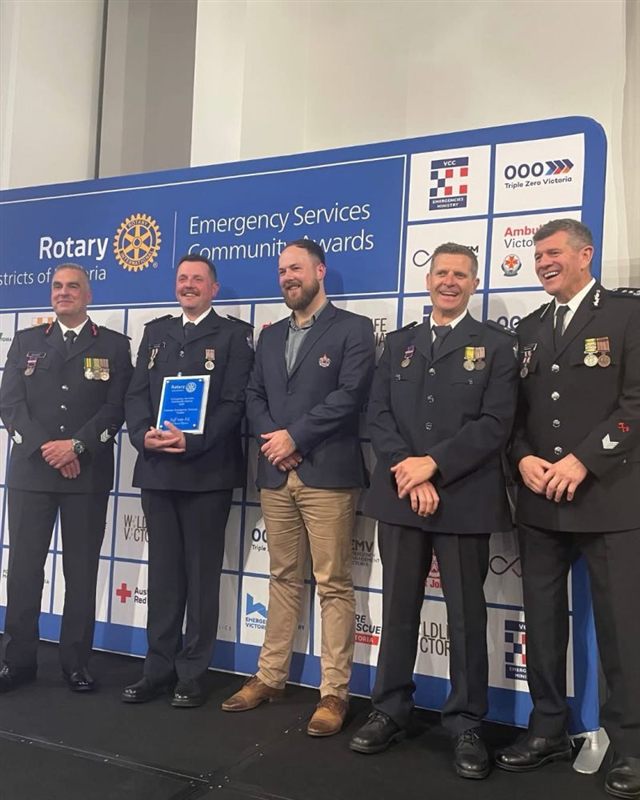
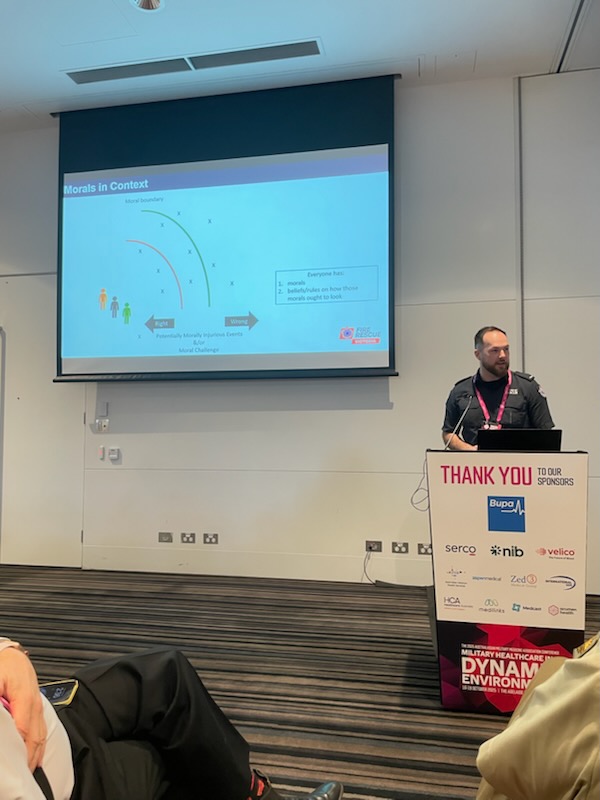
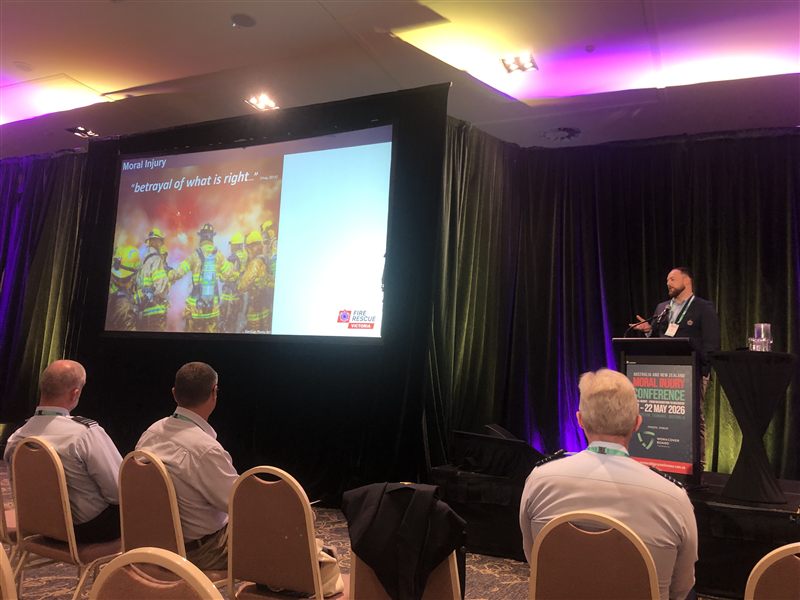
Jesse delivers professional development and conference presentations on moral injury to organisations across emergency services, healthcare, and the community sector, translating clinical frameworks into practical tools for high-demand workforces.

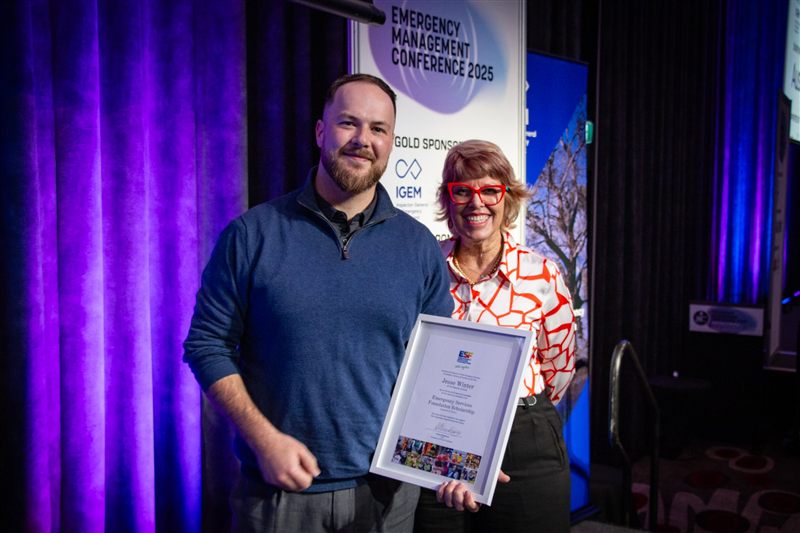
Conference Presentations
- FLMHC25: Frontlines Mental Health Conference, Keynote
- ANZMIC: Australia & NZ Moral Injury Conference
- AMMA: Australian Military Medicine Association
- EMC: Emergency Management Conference
- SCA25: Spiritual Care Australia National Conference
Organisational PD Delivery
- Emergency services agencies: station-based moral injury education
- Emergency services psychological services teams
- Emergency Services Foundation Learning Network
- Victorian Council of Emergency Management
Reports & Reviews
ESF Scholarship Report 2024
How Chaplaincy Can Support First Responders Experiencing Moral Injury
Findings from a pilot project exploring first responder experience of moral injury, with a focus on chaplaincy's role in support and recovery.
Read the Report ↗Narrative Review
The Efficacy of ACT on Moral Injury in First Responders
Evaluates the clinical application of Acceptance and Commitment Therapy for moral injury, appraising theoretical fit and the quality of existing evidence.
Read the Review (PDF)Take the first step
Book an initial consultation to talk through what you are carrying and whether we are the right fit.
Complex Youth Consulting
When every service has been tried and the system is stuck, the next step is not another referral. It is a better formulation.
Jaya Winter, Winter Psychology & Consulting
The cases nobody knows what to do with
Some young people accumulate services rather than outcomes. The file is thick, the risk is real, and everyone involved is working hard, yet nothing seems to hold. These are the cases that arrive described as intractable.
They tend to share a familiar shape:
- → Multiple placements, placement breakdowns, or repeated changes of school and carer
- → A long service history, many prior clinicians, and little sustained change
- → Conflicting prior assessments, diagnoses, and recommendations
- → Escalating risk without an agreed plan for managing it
- → Carers, schools, case teams, and clinicians pulling in different directions
We work with Out-of-Home Care providers, child protection contractors, schools, case management agencies, and families. The starting point is not another intervention. It is a clear, integrative account of why this young person, in this system, has not responded to what has already been tried.
How Jaya thinks about intractable cases
Four working assumptions shape Jaya's approach to cases where the usual pathways have been exhausted.
Integrative Formulation Across Lenses
Complex cases are rarely explained by a single lens. Jaya builds a formulation that integrates trauma, developmental, attachment, and family-systems perspectives into one coherent account of why the young person presents as they do, and why the explanations already on file have not held.
The System as Client
The referred young person is often carrying the strain of a stuck system. Jaya works with the whole network around them, carers, case workers, schools, and clinicians, treating the system's coordination and capacity as part of the clinical picture rather than background noise.
Why Prior Interventions Fail
By the time a case feels intractable, most standard interventions have already been tried. Jaya's working assumption is not that the young person is untreatable, but that previous interventions were delivered without a formulation that fit, at the wrong point in the young person's circumstances, or into a system that could not sustain them.
Working With Treatment Resistance
Refusal, disengagement, and sabotage are information. They usually make sense once their protective function is understood. Jaya treats resistance as part of the formulation rather than a barrier to it, which often opens routes forward that further pressure cannot.
Jaya Winter
Jaya is a clinical psychologist and Board-Approved Supervisor with experience across hospital, community, Out-of-Home Care, and family settings. She brings particular depth to complex and treatment-resistant presentations, including young people with significant trauma histories and those who have tried therapy before without lasting benefit.
Meet Jaya →What an engagement includes
Engagements are scoped per case, for an organisation or a family, and typically include:
- → File review, including prior assessments and interventions
- → Consultation with key workers, carers, and other stakeholders
- → Comprehensive integrative formulation (trauma, developmental, family systems)
- → A written report suitable for case meetings or court contexts
- → A practical intervention roadmap, with systems intervention and stakeholder management where needed
Discuss a case
Send a brief outline of the situation and we will arrange a conversation about whether this consulting is the right fit.
Moral Injury & Christian Faith
When what has been violated is not only your values but your faith. Psychological care for Christians carrying moral injury, in ministry and in the professions, that takes both the psychology and the theology seriously.
Why it lands differently
Moral injury is a wound to the moral self: guilt, shame, betrayal, and the fracturing of moral identity. What is moral injury? → For Christians, that wound rarely stays psychological. It reaches into a person’s standing before God, their ability to pray, and their place in a community of faith.
Christian theology gives people a rich language for guilt, and that cuts both ways. Grace, confession, and forgiveness can be profound resources for repair. But the same frameworks can sharpen the wound: if I am forgiven, why do I still feel condemned? Questions like that are not a failure of faith. They are what moral injury looks like when it happens to a believer.
Guilt, shame, and grace
When forgiveness is preached but self-condemnation persists, people often conclude the fault is theirs. Working through the gap between being forgiven and feeling forgiven is core clinical work, not a spiritual defect.
Anger at God
Moral injury often includes feeling betrayed by God: prayers unanswered, protection withheld, evil permitted. Naming that anger honestly, without being rushed to resolution, is often where repair begins.
Doubt and deconstruction
A morally injurious event can shake the whole structure of belief. Therapy does not push you back toward faith or out of it. It helps you examine what was damaged and decide what you want to rebuild.
Loss of faith community
When the injury involves the church itself, people often lose their community at the exact moment they need it most. That grief is real and deserves care in its own right.
Ministry and the professions
Moral injury reaches Christians along two quite different roads, and the care needs to know which one it is walking.
In vocational ministry
Institutional betrayal, moral compromise under congregational pressure, and the particular weight of having acted, or stayed silent, while speaking for God. Vocational moral injury entangles faith, identity, and employment in one knot.
Ministry & Church →In secular vocations
Christian paramedics, nurses, police, and defence members carry the same workplace moral injuries as their colleagues, with an extra layer: a church that may not know how to hear the story, and a workplace that does not share the faith. Care here holds both worlds without asking you to translate.
Moral Injury Consulting →How treatment differs
The clinical foundations are the same ones described on our moral injury page: formulation-driven care addressing guilt, shame, betrayal, values conflict, and moral identity. What changes is the integration. Faith is treated as central to the repair, not as a complication to work around.
Pastoral Narrative Disclosure (PND)
A structured, theologically grounded approach to processing vocational moral injury. Jesse is trained in PND. See the ministry pathway.
Building Spiritual Strength (BSS)
A person-centred, spiritually integrated model for moral injury and spiritual distress, with emerging evidence for reducing PTSD symptoms and spiritual distress.
ACT adapted to spiritual context
Acceptance and Commitment Therapy with values clarification that treats faith commitments as genuinely held values, not symptoms. Willing engagement with guilt and grief rather than avoidance of them.
Faith-integrated never means faith-imposed. You set the depth of spiritual integration, and it can change as the work unfolds.
Therapy where your faith is understood
Evidence-based psychological care for Christians who want a psychologist that shares their framework. Your faith is integrated into the work, never imposed on it, and you decide how central it is. Delivered by telehealth across Australia, from our Melbourne base.
Integrated, not imposed
Faith-integrated therapy is ordinary, evidence-based psychology delivered by a clinician who takes your faith seriously as part of who you are. The methods are the same ones any good psychologist would use, including CBT, ACT, and schema therapy, chosen to fit your situation. What differs is that your beliefs, values, and spiritual life are treated as part of the picture rather than something to set aside at the door.
You set the depth. For some people faith is the explicit centre of the work. For others it simply means not having to explain or defend what they believe while they focus on something else. Both are welcome, and the balance is yours to move at any point. We do not push you toward faith or away from it.
Who this suits
Christians who want a shared framework
You want a psychologist who already understands the language of faith, church life, and Scripture, so the work can go deeper sooner.
When the issue entangles with faith
Anxiety, depression, grief, relationships, or a major life transition that is bound up with questions of guilt, calling, doubt, or belonging, where faith cannot be neatly separated from the problem.
When faith shapes the goal
When what a good outcome looks like is shaped by your convictions about meaning, forgiveness, family, or vocation, and you want that respected rather than reframed.
In vocational ministry? Ministers, pastoral workers, and their families have a dedicated, fully confidential pathway. Ministry & Church →
Care from clinicians who share the framework
Jaya Winter is a clinical psychologist and Board-Approved Supervisor who works comfortably with clients for whom faith or spirituality is central to their identity, alongside her depth in family therapy, trauma, and complex presentations.
Jesse Winter is a provisional psychologist who works with the everyday evidence-based therapies, including CBT, ACT, and schema therapy, and holds a Bachelor of Theology alongside his psychology training. For Christian clients that means clinicians who already speak the language of faith and Scripture, so your beliefs are understood from the first session rather than needing to be explained.
Book from anywhere in Australia
We are based in Melbourne and deliver every session by telehealth, so you can work with a psychologist who understands your faith wherever you are in Australia.
Therapy & Family
Individual and family therapy built on a clear formulation of what is actually driving your challenges. It is integrative by design, led by clinical judgement, and shaped around what matters to you. Delivered entirely via telehealth across Australia.
Clients and presentations
Professionals and people in demanding roles
People who hold things together at work while quietly struggling underneath. You do not have to be visibly in crisis to deserve good care.
People who want therapy that is explained
Clients who want to understand what they are doing in therapy and why, so the approach is named, the formulation is shared, outcomes are tracked, and the work is driven by what is actually helping.
People ready to work at depth
Those who have tried therapy before and want more than symptom management, and are ready to work on the longstanding patterns underneath.
Families
Families working through conflict, communication breakdown, significant life transitions, or the impact of one member's mental health on the whole system.
Evidence-based, formulation-driven, and genuinely integrative
We start with a formulation, not a protocol
Before choosing any technique, we build a clear, shared picture of what is driving and maintaining your challenges. That formulation, rather than a diagnosis or a manual, decides what we do and in what order.
Your goals set the direction
We bring clinical expertise and advanced training; you bring expert knowledge of your own life, values, and what you want to be different. The direction of therapy follows from both.
We track whether it is working
We use validated outcome measures and your own feedback at each session to see what is helping, stay accountable, and change course when something is not landing.
Integrative by design
We draw coherently on several evidence-based models rather than applying one in every situation, matching the approach to your formulation and goals, and working with the common processes that underlie anxiety, depression, and related challenges rather than treating each in isolation.
Therapy typically moves from assessment and shared formulation into active treatment, at a pace set with you.
Therapy for the whole family system
Family therapy works with the relationships and patterns that hold a problem in place, because most human challenges live in our relationships, not only inside one person. Relationships can be a source of real distress, real strength, or both.
Rather than focusing on one person's internal experience, family therapy looks at how each person's behaviour, communication style, and emotional world shapes and is shaped by everyone around them, and where those patterns can shift.
Sessions may involve the whole family, a subset of members, or alternate between joint and individual work, depending on what the presenting concerns and goals indicate is most useful.
All family therapy is delivered via telehealth. To learn about the therapist, visit Our Team.
Faith-integrated family therapy. Jaya has particular experience with families for whom Christian faith is central, holding that faith as part of the family system rather than setting it aside. See faith-integrated therapy.
Families in conflict
Patterns of argument, communication breakdown, or ongoing tension that feels impossible to resolve.
Families in transition
Separation, divorce, blended families, grief, illness, relocation, or other major life changes disrupting the family system.
After a rupture
Rebuilding trust and connection following betrayal, estrangement, or a significant breakdown in the family relationship.
Impact of one member's struggles
When one family member's mental health, substance use, or behaviour is affecting the wellbeing of the whole family.
The full list of family therapy approaches is on Our Team.
Take the first step
Book an initial consultation. It is a chance to talk through what is going on and decide together whether we are the right fit. No commitment beyond that first conversation.
Book Online
Use the booking system below to schedule an appointment or initial consultation. Payments are processed securely at the time of booking.
Select a clinician
Session fees
Sessions with Jaya
Clinical Psychologist
The rebate applies with a Mental Health Treatment Plan from your GP; please provide your referral details when booking. Rebate amount current as at July 2026 and set by Medicare, so it may change with MBS indexation.
Sessions with Jesse
Provisional Psychologist
Sessions with Jesse, as a provisional psychologist, do not attract a Medicare rebate, and the session fee is set with that in mind.
A few things to know
New clients
Select "Initial Consultation" for your first appointment. This allows us to discuss your situation and determine whether we are the right fit for your needs.
Medicare rebates
Medicare rebates are available for sessions with Jaya with a Mental Health Treatment Plan from your GP; please provide your referral details when booking. Sessions with Jesse, as a provisional psychologist, do not attract a Medicare rebate.
All appointments are telehealth
We are a telehealth-only practice. A secure video link will be sent to you before each session. You can join from anywhere in Australia.
Enquiries
Our Team
Winter Psychology & Consulting is led by experienced clinicians with complementary expertise across individual therapy, family therapy, psychological supervision, and moral injury consulting.
Jaya Winter
Jaya is a clinical psychologist whose warmth and depth make her equally at home with the most complex clinical presentations and with people who have never tried therapy before. She believes that good therapy is collaborative, evidence-informed, and shaped by what actually matters to the person in front of her.
Jaya holds endorsement as a clinical psychologist and is a Board-Approved Supervisor with extensive experience across hospital, community, Out-of-Home Care, and family settings. Her areas of particular interest include family therapy, complex family systems, trauma, eating and body image, anxiety, and supporting clients whose faith or spirituality is central to their identity.
Jaya brings particular depth to complex and treatment-resistant presentations, including clients with significant trauma histories, personality pathology, or those who have tried therapy before without lasting benefit. She draws on an integrated range of approaches according to formulation and goals.
For welfare-sector organisations and families supporting young people in complex or seemingly intractable situations, Jaya offers Complex Youth Consulting. She also works with Christian individuals and families seeking faith-integrated therapy.
Areas of Interest
- Family Systems & Complex Dynamics
- Trauma & Attachment
- Eating & Body Image
- Child & Adolescent Mental Health
- Anxiety & Depression
Therapeutic Approaches
Family & Systems
- Attachment-Based Family Therapy (ABFT)
- Brief Strategic Family Therapy (BSFT)
- Bowen Family Systems
- Child-Parent Dyadic Work
- Gottman Method (Couples)
Trauma & Complex
- Eye Movement Desensitisation & Reprocessing (EMDR)
- Mentalisation-Based Treatment (MBT)
- Cognitive Behaviour Therapy (CBT)
Eating Disorders
- Enhanced Cognitive Behaviour Therapy (CBT-E)
- Family-Based Treatment (FBT)

Jesse Winter
Jesse is a provisional psychologist whose approach is non-stigmatising and genuinely collaborative. He is particularly well suited to clients whose faith or spirituality is central to their identity, those working in high-demand or high-risk roles, and people navigating major life transitions, relationship difficulties, depression, or anxiety.
Jesse holds a Bachelor of Theology (BTh) and a Graduate Certificate in Theology, with direct pastoral and ministry experience across Baptist, Church of Christ, Presbyterian, and Christian Reformed (CRCA) contexts. He is trained in Pastoral Narrative Disclosure (PND), bringing an integrated psychological and theological lens to his work with individuals and organisations across all Christian denominations.
Jesse's work has a particular focus on moral injury assessment and treatment, emergency services psychology, and faith-integrated care. He is the 2024 Emergency Services Foundation (ESF) Scholarship recipient and a regular conference presenter on moral injury. He also sees Christian adults wanting faith-integrated therapy for everyday concerns, alongside the ministry pathway.
Areas of Interest
- Moral Injury (individuals & organisations)
- Emergency Services & First Responders
- Christian clients & faith-integrated care
- Ministers, pastoral workers & ministry spouses
- Returning mission workers & harm from leaders
- Anxiety, depression & complex presentations
- Psycho-Spiritual Integration
Therapeutic Approaches
Evidence-Based Therapies
- Cognitive Behaviour Therapy (CBT)
- Dialectical Behaviour Therapy (DBT)
- Acceptance & Commitment Therapy (ACT)
- Schema Therapy
Faith-Integrated
- Pastoral Narrative Disclosure (PND)
- Building Spiritual Strength (BSS)
Ready to book?
Book directly with Jaya or Jesse, or view all available times to decide once you see the calendar.
Contact Us
Send us an enquiry before booking, or ask a question about the service. All general enquiries go to admin@winterpsychology.com.au.
We would like to hear from you
Service Area
Telehealth only. Available to clients across Australia.
Crisis Support
We are not a crisis service. If you are in immediate distress, contact Lifeline on 13 11 14 or attend your nearest emergency department.
Ready to book an appointment?
Care that doesn’t ask you to explain yourself
Confidential psychological care for ministers, pastoral workers, minister spouses, and their families, delivered by a psychologist who knows ministry from the inside, so your faith and your vocation are understood, not questioned.
What this pathway gives you
Care you don’t have to translate
Your faith, your calling, and the pressures of church life are understood from the first session. No explaining, no defending.
Genuinely confidential, genuinely external
A private practice with no reporting line to any church, board, or denomination, subject only to the standard legal limits that apply to every psychologist in Australia. The support is for you, not the institution.
Help for the whole household
Individual work for ministers and spouses, and family sessions for the home that carries the vocation alongside you.
The wounds ministry actually causes
Moral injury, compassion fatigue, burnout, and institutional betrayal, addressed directly with evidence-based, faith-integrated care.
Not in vocational ministry? Christian adults seeking therapy where their faith is understood have a dedicated pathway.
Faith-integrated therapy →Getting started
Step 1
Enquire
Reach out for a confidential, no-obligation conversation about what you need and whether we are a good fit.
Step 2
First session
Meet with Jesse by telehealth and begin with your story, at your pace. No assessment to pass, no agenda but yours.
Step 3
Ongoing care & billing
Continue with regular sessions for as long as they help. Individuals are billed privately per session; churches and organisations can fund care through a partnership plan, billed per session or as an annual retainer. Details below.
The full picture
Everything below is here in full for anyone who wants the detail, from how sessions stay confidential to how churches can fund care for their leaders.
Ministry is one of the most psychologically demanding vocations there is. The combination of relational intensity, moral weight, public accountability, spiritual expectation, and institutional complexity creates conditions that are genuinely distinct from other high-demand professions.
Jesse holds a Bachelor of Theology (BTh) and a Graduate Certificate in Theology, and brings direct pastoral and ministry experience within Baptist, Church of Christ, Presbyterian, and Christian Reformed (CRCA) contexts. He works sensitively and substantively across all Christian denominations.
This dedicated pathway is for people who want psychological care that does not require them to explain or defend their faith, their vocation, or the world in which they work.
Ministers and pastors
Senior leaders, associate ministers, youth and children's pastors navigating the specific moral and relational demands of pastoral leadership.
Returning mission workers
Overseas mission workers and their families re-entering home culture, including those carrying trauma from cross-cultural or high-risk ministry contexts.
Institutional betrayal and spiritual trauma
People recovering from harmful church experiences, spiritual trauma, or religious trauma, including the loss of faith community and religious identity.
Will anyone know I’m here?
No. Winter Psychology & Consulting is a private practice with no reporting relationship to any denomination, church board, or ministry employer. No one is told you are a client, and nothing from your sessions is shared. The standard legal limits that apply to every psychologist in Australia are the only exceptions: serious risk of harm to yourself or others, a court order, or your own written consent. If your church or board funds your sessions, they will see the number of sessions billed, never the content.
Psychologically and theologically integrated care, matched to your presentation and goals.
Pastoral Narrative Disclosure (PND)
A structured, theologically grounded approach to processing vocational moral injury. Jesse is trained in Pastoral Narrative Disclosure.
Building Spiritual Strength (BSS)
A person-centred, spiritually integrated group therapy model for moral injury and spiritual distress with emerging evidence for reducing PTSD symptoms and spiritual distress.
Moral Injury Assessment and Treatment
Comprehensive assessment using pastoral and theological lensing alongside clinical frameworks, addressing guilt, shame, betrayal, values conflict, and moral identity reconstruction.
Moral injury and Christian faith →Trauma in Christian Contexts
Trauma-informed care integrating psychological and theological frameworks, including focused work with returning mission workers and those who have experienced church-related trauma.
Institutional Betrayal and Spiritual Trauma
Psychological support for people recovering from harmful church experiences, religious trauma, institutional betrayal, and the grief of losing a faith community.
Faith-Integrated Individual Therapy
Evidence-based psychological therapy for anxiety, depression, trauma, and relationship difficulties, delivered with sensitivity to Christian faith, values, and worldview.
A church calls one person, but the whole household ends up inside the vocation. Spouses and children share its rhythms, its interruptions, and its expectations, usually without having chosen the role and often without anyone asking how they are carrying it.
Families are systems. When ministry stretches one member thin, the slack is taken up at home, quietly and often invisibly. Care for ministry families takes that seriously: Jesse works individually with ministers, spouses, and young people, and Jaya, a clinical psychologist with extensive family therapy experience, works with ministry families together. The same confidentiality applies to every member of the household.
Minister spouses
Spouses carry a hidden relational load: congregational scrutiny, visibility they never applied for, and the quiet work of sharing a partner with an institution. And when the minister is the one everyone else turns to, the spouse often has no pastor of their own.
Pastors’ kids
Growing up in the glass house means forming your own faith under public expectation, where doubt can feel like a family liability rather than a normal part of growing up. Support for children and adolescents navigating identity, faith, and the pressure of being watched.
The family as a system
Ministry demands rarely stay at church. Evenings, weekends, and crises reshape home life around the congregation’s needs. Family sessions with Jaya look at the system itself: roles, boundaries, and how a household can hold the vocation without being consumed by it.
For ministers, spouses, and pastoral workers carrying the hidden weight of ministry, including moral injury, compassion fatigue, and the erosion of vocational meaning.
- ✓ Pastoral Narrative Disclosure (PND): structured, theologically grounded processing of vocational moral injury
- ✓ Moral injury assessment with pastoral and theological lens
- ✓ Values clarification within a faith framework
- ✓ Psycho-spiritual integration: reconnecting professional identity with faith calling
- ✓ Compassion fatigue and burnout recovery
- ✓ Support for minister spouses and dependent family members
- ✓ Building Spiritual Strength (BSS): a person-centred, spiritually integrated group therapy model for moral injury and spiritual distress
Ministers are among the least-served populations in workplace wellbeing. Businesses have Employee Assistance Programmes. Schools have student welfare. Hospitals have occupational health. Churches often have nothing that is genuinely confidential, psychologically competent, and theologically integrated.
Winter Psychology offers an independent, external psychological support service for churches, denominations, and Christian organisations, structurally outside denominational reporting lines, subject only to the standard legal limits that apply to every psychologist in Australia, so the support is for the person, not the institution.
Senior and associate pastors
Those carrying the primary spiritual and organisational weight of congregational leadership, including the particular loneliness of senior pastoral roles.
Denominational and episcopal leaders
Leaders whose decisions shape entire denominational systems, where confidential external support is structurally impossible to access from within the institution.
Ministry and Christian NGO leaders
Senior leaders of Christian organisations navigating the intersection of vocational calling and institutional responsibility.
Boards and elderships
Organisations seeking preventative care and psychological consultation for their leadership before a crisis demands it.
Christian leaders and workplaces
Anyone in a Christian workplace, and Christian leaders more broadly (for example, Christian school principals), navigating faith, vocation, community expectation, and institutional complexity simultaneously.
Those who have experienced harm from leaders
Ministry workers and congregants who have experienced spiritual trauma, religious trauma, or the grief of losing a faith community.
What makes this different
Fully Confidential
Winter Psychology & Consulting do not provide written reports or share in-session details unless otherwise arranged with the full consent of the client. Aggregate, non-identifiable utilisation data can be provided on request to facilitate board-approved support.
Genuinely External
Winter Psychology is a private practice independent of all denominational structures. There are no institutional conflicts of interest. The support is for the minister, not the institution.
Theologically Integrated
Jesse holds a BTh and GCertTheol and brings direct pastoral and ministry experience across Baptist, Church of Christ, Presbyterian, and CRCA contexts. Care is faith-integrated, not merely faith-tolerant. Ministers do not need to explain or defend their faith, their vocation, or the world in which they work.
Evidence-Based
All care is grounded in evidence-based psychological practice. Jesse draws on CBT, ACT, schema therapy, Pastoral Narrative Disclosure (PND), and Building Spiritual Strength (BSS), integrated according to each minister's individual presentation and goals.
Winter Psychology offers a church partnership across three tiers by size, from a local church through to denominations and sending organisations. Each is scoped to your context in an initial conversation, and can be billed per session or as an annual retainer (which adds guaranteed and priority bookings, a lower per-session cost, and discounted further sessions). Retainer terms, including the minimum term and how the reduced session rate applies, are set out in the written agreement provided before any partnership begins. Ministers access sessions directly and independently, and the church receives no clinical information.
Tier 1
Pastoral Wellbeing Plan
For small churches with one to two ministry staff. Covers the primary minister and spouse, with individual sessions and priority scheduling.
Tier 2
Ministry Team Plan
For medium churches or church networks with three to eight ministry staff. Covers all employed ministry staff and spouses, plus organisational consultation.
How to get started
Step 1
Initial Conversation
A confidential conversation to understand your organisation's context and what you are hoping to achieve. No obligation.
Step 2
Scope and Pathway
We identify the right tier and any bespoke needs, confirm the terms, and set up access for your leaders.
Step 3
Leaders Access Support
Each covered minister contacts Jesse directly and independently. Booking is via the practice. The church is billed separately on an annual basis.
Always
Fully Confidential
No clinical information is ever shared with the church. The support is for the minister, not the institution. Always.
Start with a confidential conversation
Whether you are a minister looking for your own support or a church wanting to care for your leaders, the first step is the same: a private, no-obligation conversation.
Partner with Us
For churches, denominations, and Christian organisations enquiring about annual pastoral wellbeing plans and denominational partnerships.
Partnership Enquiry
Partnership Plans
Tier 1
Pastoral Wellbeing Plan
1-2 ministry staff
Tier 2
Ministry Team Plan
3-8 ministry staff
Tier 3
Denominational Partnership
10+ leaders, custom-scoped
Prefer to read more first?
Privacy Policy
Last updated: June 2025
Who we are
Winter Psychology & Consulting is a private telehealth psychology practice operating under Australian law. We are bound by the Australian Privacy Act 1988 (Cth) and the Australian Privacy Principles (APPs). Our principal contact is admin@winterpsychology.com.au.
What information we collect
We collect personal information only when you actively provide it to us. This includes:
- → Information submitted through our contact and enquiry forms (name, email address, phone number, message content)
- → Booking information collected through our booking system (Halaxy)
- → Clinical records created during the provision of psychological services
- → Website analytics data collected automatically via Google Analytics 4 (see below)
Why we collect it
We collect personal information to:
- → Respond to your enquiries and arrange appointments
- → Provide psychological services to clients
- → Fulfil our legal obligations as a registered health practice
- → Improve our website and services
Contact form
Enquiries submitted via our website contact form are processed by Formspree Inc. and forwarded to admin@winterpsychology.com.au. Formspree may temporarily store form submissions on its servers in accordance with its own privacy policy (formspree.io/legal/privacy-policy). We do not store form submissions on this website's server.
Booking system
Online bookings are handled by Halaxy, a clinical management platform. Information collected during booking is subject to Halaxy's privacy policy. Clinical records created in Halaxy are stored securely in Australia and are accessible only to the treating clinician.
Google Analytics
We use Google Analytics 4 to understand how visitors use our website. This collects anonymised data including pages visited, time on site, and general geographic region. IP addresses are anonymised. Google Analytics does not collect any personally identifiable information through our website. You can opt out of Google Analytics tracking at tools.google.com/dlpage/gaoptout.
Confidentiality of clinical information
All clinical information shared with Winter Psychology & Consulting is confidential and handled in accordance with the Privacy Act 1988, the Australian Privacy Principles, and the AHPRA Code of Conduct for Psychologists. Clinical information is not shared with third parties (including organisations that have contracted us for partnership plans) without your explicit written consent, except where required by law (for example, mandatory reporting obligations or court orders).
Organisational partnerships
Where a church, denomination, or organisation contracts Winter Psychology for a partnership plan, the organisation is billed for the service but receives no clinical information about individual staff who access sessions. Usage data (number of sessions used, not by whom) may be provided to the contracting organisation only with explicit written consent from the individuals concerned.
Storage and security
Personal information is stored securely using industry-standard measures. We do not sell, trade, or otherwise transfer your personal information to third parties except as described in this policy or as required by law.
Your rights
Under the Australian Privacy Act, you have the right to:
- → Access the personal information we hold about you
- → Request correction of inaccurate information
- → Request deletion of personal information (subject to our legal retention obligations as a health practice)
- → Make a complaint about how we have handled your information
To exercise any of these rights, contact us at admin@winterpsychology.com.au. Complaints that cannot be resolved directly may be referred to the Office of the Australian Information Commissioner at oaic.gov.au.
Changes to this policy
We may update this policy from time to time. The current version is always available on this page. Continued use of our website or services after an update constitutes acceptance of the revised policy.
Questions about this policy? Contact us at admin@winterpsychology.com.au